Buying your first home in Encino can feel like aiming for a premium neighborhood on a starter budget. The good news is that condos and townhomes often open the door at a much lower price point than detached homes, but the fine print matters just as much as the list price. If you want to understand what first-time buyers should watch for in Encino, from HOA fees to parking to financing, this guide will help you move forward with more confidence. Let’s dive in.
Why Encino condos attract first-time buyers
Encino is still one of the San Fernando Valley’s higher-priced markets, which is exactly why many first-time buyers start with attached housing. Current market data shows Encino condos listed at a median price of about $499,000 and townhomes at about $749,000, while Encino’s overall median sale price reached $1,699,428 in May 2026.
That price gap matters if you want to buy into Encino without stretching for a detached house. It gives you a chance to focus on location, monthly payment, and long-term fit instead of chasing a home type that may not match your budget today.
What to expect in Encino inventory
Encino condo and townhome options can vary more than many first-time buyers expect. Current listings include one-bedroom units around 683 to 726 square feet, two-bedroom homes around 1,000 to 1,600 square feet, and some larger two- and three-bedroom layouts above 1,900 square feet.
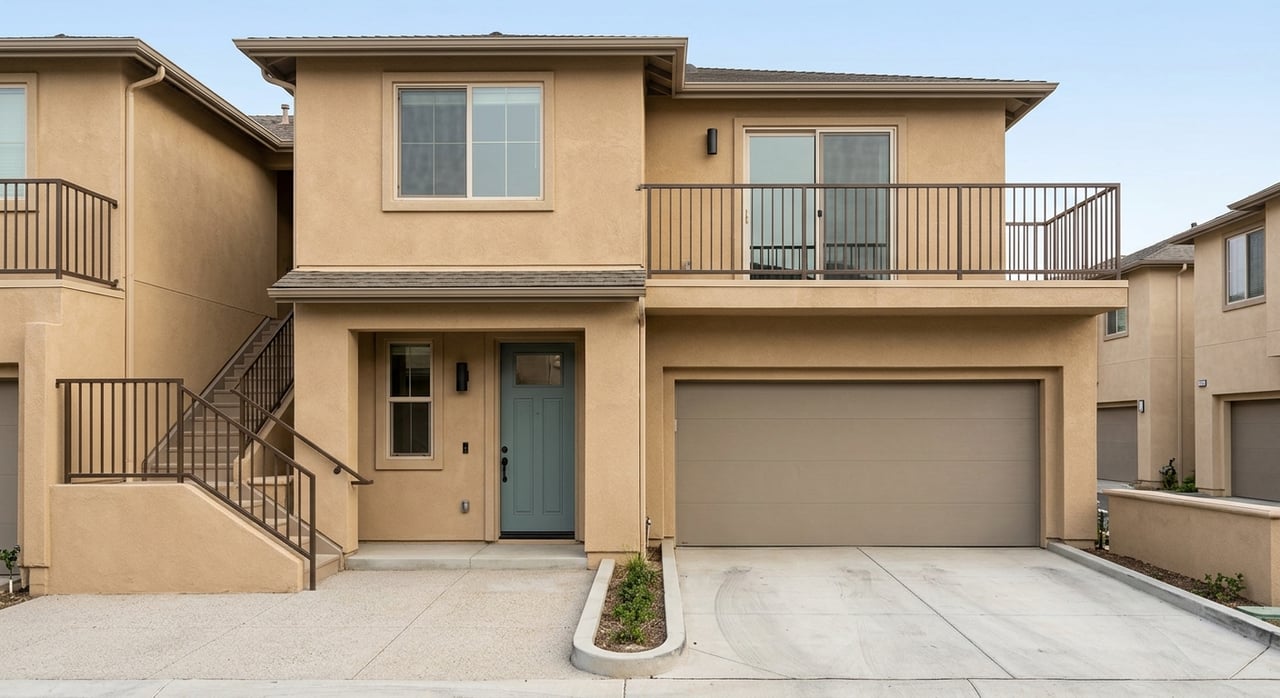
You may also see several building styles. Common condo formats include mid-rise buildings with interior hallways, garden-style buildings with outside entrances, and multistory townhome-style homes that share walls or, in some cases, appear more detached in layout.
That means two homes with similar asking prices can live very differently day to day. One may offer elevator access and shared amenities, while another may feel more like a small house with multiple levels and direct garage access.
Condos vs townhomes in California
One of the biggest points of confusion for first-time buyers is that a townhome is not always a separate legal ownership type in California. The California Department of Real Estate explains that “townhome” often describes the architecture, while the legal structure may actually be a condominium or a planned development.
Why does that matter to you? Because legal structure can affect maintenance responsibilities, HOA rules, financing, and what you actually own beyond your interior space.
In a condo structure, you generally own your unit plus an undivided interest in the common area. That common area may include hallways, grounds, exterior features, and sometimes parking areas, depending on the governing documents.
Parking matters more in Encino
Encino is described as minimally walkable, with a Walk Score of 45. For many buyers, that makes parking and car access more than just a nice extra.
In attached housing, parking is not always as simple as “comes with a garage.” A space may be assigned, deeded, shared, or treated as exclusive-use common area under the HOA structure.
Current listings show examples with garage parking and even two garage spaces, but you should verify the exact parking rights before you close. Ask whether the space is assigned, whether it transfers with the sale, and whether guest parking is available for visitors.
Look beyond the purchase price
A first-time buyer budget should never stop at the list price. In Encino, HOA dues can make a major difference in your real monthly cost.
Sample listings show HOA fees in the several-hundred-dollar range, including examples like $595 and $834 per month. That means two homes with the same purchase price could have very different monthly carrying costs.
A practical payment estimate should include:
- Principal and interest
- Property taxes
- Insurance
- HOA dues
- A cushion for possible special assessments
HOA dues may cover things like exterior maintenance, common-area upkeep, water, sewer, trash, insurance, recreation areas, and reserve funding. The important part is not whether dues are high or low by themselves, but what they cover and whether the association appears financially prepared.
HOA documents deserve real attention
If you are buying in a condo or townhome community, the HOA review period is one of the most important parts of the process. This is where you learn how the community operates, what rules apply, what fees you owe, and whether larger expenses may be coming.
In California, sellers in a common interest development must provide a package of HOA documents. Under current disclosure rules, that includes governing documents, current assessments and fees, unpaid assessments or fines, unresolved violation notices, rental restrictions if any, requested board minutes, and the most recent inspection report required by Section 5551.
That last item is especially important for 2026 buyers. The inspection report is now part of the standard California condo resale disclosure package, which gives you a better view into the condition of certain building components before closing.
Why reserves and inspections matter
The monthly HOA amount tells only part of the story. The reserve study and inspection history can tell you whether the association may need to raise dues later or issue a special assessment.
California law requires reserve-study visual inspections at least every three years for qualifying associations. These studies estimate the remaining life, repair costs, and funding needs for major components.
California also requires inspection of exterior elevated elements in condo projects at least every nine years, with the written report folded into the reserve study. For buyers, this helps reveal whether balconies, decks, walkways, waterproofing, and related components may need future work.
This is where careful review can save you from surprises. A unit with lower dues is not always the better value if the HOA appears underfunded or major repairs are looming.
Know the rules on fee increases
Many first-time buyers ask whether HOA dues can rise right after closing. In California, there are limits, but they are not a guarantee against future increases.
Under Civil Code 5605, regular assessments generally cannot rise more than 20 percent over the prior fiscal year without owner approval. Special assessments that exceed 5 percent of the association’s budgeted gross expenses in a fiscal year generally require approval of a majority of a quorum of members.
There are also emergency exceptions under California law. The practical takeaway is simple: treat current dues as today’s cost, not a permanent promise.
Financing a condo is different
Financing a condo or townhome can be more layered than financing a detached home. With attached housing, lenders may evaluate not only you as the borrower, but also the project itself.
For FHA financing, the condo project may need FHA approval or Single-Unit Approval, along with compliance on areas like insurance, title, financial condition, pending legal action, and physical condition. Conventional lenders may also review whether a condo is considered warrantable and may look at the association’s finances, structural issues, lawsuits, and inspections.
This is one reason an affordable-looking condo can still become complicated during escrow. It helps to confirm financing fit early instead of assuming every lender will treat every project the same way.
First-time buyer programs may help
For eligible California buyers, CalHFA programs can be worth exploring. CalHFA generally requires homebuyer education, owner occupancy, and allows use with approved condominium or PUD properties.
CalHFA’s MyHome assistance offers deferred-payment junior loans of up to 3.5 percent of the purchase price or appraised value for FHA loans and up to 3 percent for conventional loans. CalHFA also defines a first-time homebuyer, for conventional program purposes, as someone who has not had an ownership interest in a principal residence during the previous three years.
That does not mean every Encino condo will qualify, but it does mean some first-time buyers may have more options than they think. The key is checking both your eligibility and the property’s eligibility early.
Inspections and contingencies still matter
A condo may look simpler than a house, but inspections still matter. An appraisal and a home inspection serve different purposes, and both can be important.
A contingent inspection can give you the ability to cancel without penalty if the results are unsatisfactory. That is especially useful in attached housing, where older roofs, balconies, waterproofing, shared systems, and deferred maintenance can affect your risk.
You may also have only a limited window to review condo documents after your offer is accepted. Treat that review period like a real deadline, not a paperwork formality.
How competitive is Encino right now?
Encino is not an easy market, but it is not purely a frenzy either. Recent data shows homes averaging 56 days on market, with an average sale-to-list ratio of 97.4%, and the market described as somewhat competitive.
For first-time buyers, that can create opportunity if you stay prepared. Some homes still receive multiple offers, but not every listing moves instantly, which means smart due diligence and solid financing can help you compete without rushing past important details.
A smart first-time buyer checklist
If you are narrowing down Encino condos and townhomes, focus on these questions before you commit:
- What is the true monthly payment, including HOA dues?
- What do the HOA dues actually cover?
- How strong are the reserves?
- Are there recent or pending special assessments?
- What do the reserve study and inspection reports show?
- Is the parking assigned, exclusive-use, or deeded?
- Is the project likely to work with your financing?
- Are there rental restrictions or other rules that could affect your plans?
- Does the layout fit how you live now and in the next few years?
For many buyers, success in Encino is less about finding the cheapest option and more about finding the best-balanced one. The right condo or townhome should fit your budget, lifestyle, and tolerance for future costs.
Buying your first place in Encino can be a smart way to enter a premium market without taking on the cost of a detached home. If you want practical guidance on comparing condos, reviewing monthly costs, and making sense of HOA details, Brandon Kaufman can help you move forward with clarity.
FAQs
What is the difference between an Encino condo and an Encino townhome?
- In California, “townhome” often describes the style of the home, while the legal ownership may still be a condo or planned development, which can affect maintenance, HOA scope, and financing.
How much do HOA fees matter for Encino first-time buyers?
- HOA fees matter a lot because they can add several hundred dollars or more to your monthly housing cost, and they may cover services, insurance, maintenance, and reserve contributions.
What should first-time buyers review in Encino HOA documents?
- You should review the governing documents, current dues, unpaid assessments or fines, violation notices, rental restrictions if any, board minutes you request, and the most recent required inspection report.
Can first-time buyers use CalHFA for Encino condos?
- Some buyers may be able to use CalHFA for approved condominium or PUD properties if they meet program rules for education, occupancy, and eligibility.
Why is parking such a big issue for Encino condos and townhomes?
- Encino is minimally walkable, so many buyers rely on cars, which makes it important to confirm whether parking is included, assigned, garage-based, or treated as exclusive-use common area.
Are Encino condos easier to finance than houses?
- Not always, because lenders may review the condo project itself in addition to your borrower profile, including finances, insurance, legal issues, and physical condition.