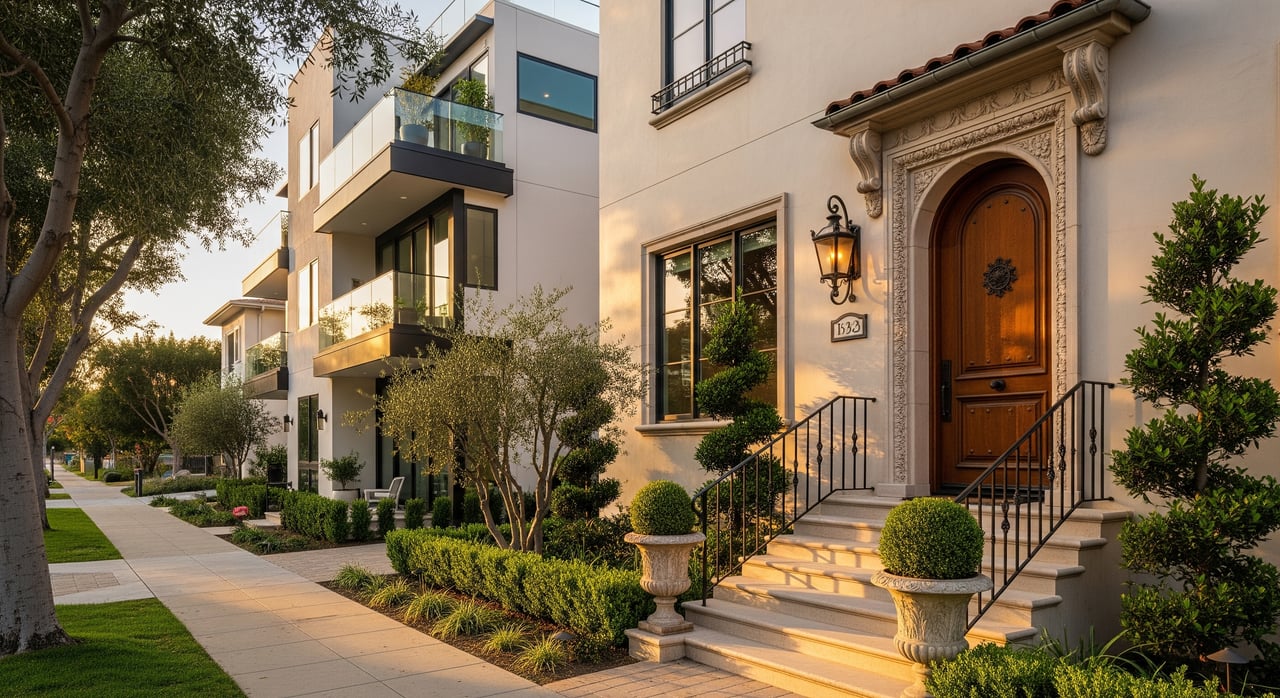
Deciding between a condo and a townhome in Pico‑Robertson can feel tricky. You want the right mix of location, comfort, and budget without surprises down the road. In this guide, you will learn how ownership works, what HOAs cover, how lenders view each option, and what to look for in local buildings. You will also get a practical checklist to help you choose with confidence. Let’s dive in.
Condo vs. townhome basics
What you own in a condo
A condominium typically means you own the interior of your unit and a shared interest in the common areas. The HOA manages the exterior, roof, and shared systems. You follow the community’s CC&Rs and rules, and you carry an HO‑6 “walls‑in” insurance policy that covers the interior and personal property.
What you own in a townhome
Townhomes describe the style, not always the legal form. In a fee‑simple townhome, often part of a PUD, you may own the unit plus the land under it. That usually means more control over the exterior, and lenders often treat it like a single‑family home. Some townhomes are legally condominiums. Those have condo‑style ownership where the HOA manages exteriors and common areas.
Why the distinction matters
The legal form affects maintenance, lending, and insurance. Condos can face project eligibility reviews from lenders, while fee‑simple townhomes often follow single‑family lending standards. Your insurance needs differ too. Confirm the legal type early so you know your responsibilities and loan options.
What you will see in Pico‑Robertson
Mid‑century condo buildings
You will find many low‑rise buildings that began as apartments and later became condos. These are often two to four stories with shared entries and on‑site parking. They can be more affordable to buy, yet the age of the building can mean future repairs and possible special assessments.
Townhouse complexes
Scattered complexes built from the 1980s to the 2000s offer multi‑story living with private entries and patios. Some are fee‑simple or PUD, and others are condo‑form. Always check the parcel type to understand what you own and what the HOA covers.
Newer infill and small walk‑ups
You may also see newer, smaller projects with modern finishes and higher HOA dues for amenities. Duplex or triplex conversions can appear too. With any small association, review the HOA’s reserves and maintenance plans closely since a few owners share the costs.
HOAs and maintenance
Who handles what
- Condos: HOAs usually cover exterior structure, roof, common systems, landscaping, trash, and master insurance. You handle interior maintenance and your HO‑6 policy.
- Fee‑simple townhomes: HOAs often maintain roads, gates, and shared amenities. You are usually responsible for the exterior, roof, and any yard space.
- Condo‑form townhomes: Treated like condos with HOA responsibility for exteriors and common elements.
HOA financial health
A strong HOA has a healthy reserve fund, clear budgets, and a current reserve study that maps future projects. Ask about any recent or pending special assessments. Review board meeting minutes and litigation disclosures. High delinquency or major lawsuits can affect lending and your costs.
Rules and lifestyle
Expect rules about parking, pets, quiet hours, and rentals. Condos often reduce day‑to‑day chores since the HOA handles exteriors, but you trade some control over appearance and use. Fee‑simple townhomes can feel more like single‑family living with private entries and more autonomy, but they may require more upkeep.
Typical cost patterns
Condos often have higher HOA dues that cover exterior items and building systems. Fee‑simple townhomes may have lower dues but you pay for roof, paint, and fencing directly. In Pico‑Robertson, building age matters. An older condo with deferred maintenance can face assessments. A newer townhome may keep near‑term costs lower.
Financing and insurance
How lenders view each option
Condos are often reviewed as a project. Lenders look at owner‑occupancy, reserves, delinquencies, litigation, and insurance. If a project is not eligible, you may see higher down payment needs, higher rates, fewer lenders, or cash requirements. Fee‑simple townhomes in a PUD usually follow single‑family standards. If a townhome is legally a condo, it is treated like a condo by lenders.
FHA and VA specifics
FHA and VA loans typically require project approval for condos. Some lenders offer limited alternatives for individual units with stricter borrower criteria. If you plan to use FHA or VA, confirm the project’s status early to protect your timeline and loan options.
Insurance to carry
- Condos: Get an HO‑6 policy for interior finishes, personal property, liability, and loss assessment. Confirm what the HOA master policy covers and where you may have gaps.
- Fee‑simple townhomes: An HO‑3 homeowner policy is common since you likely insure the structure and exterior improvements.
Steps to streamline your loan
- Ask your lender how they classify the unit: condo, PUD, or fee‑simple.
- If condo, request the condo questionnaire early. Your lender will review HOA reserves, insurance, and rules.
- For older Pico‑Robertson condos, allow extra time for HOA document review.
First‑time buyer checklist for Pico‑Robertson
Before you write an offer
- Confirm the legal unit type on public record: condo, fee‑simple/PUD, or single‑family.
- Request from the HOA: CC&Rs, bylaws, current budget, reserve study, recent board minutes, master insurance declarations, management agreement, special assessment notices, and any litigation disclosures.
- Ask your lender: How is the unit underwritten? Is the project FHA or VA approved if needed? What down payment and PMI apply? Any owner‑occupancy or reserve requirements?
During showings and inspections
- Listen for noise transfer and ask about party wall construction. Learn where plumbing stacks and HVAC lines run.
- Confirm assigned parking and guest parking rules. Verify storage lockers or extra space.
- Scan exteriors for roof condition, paint, decks, and common areas. These signal future costs.
- Note security features, lighting, and walkability to daily needs.
Budget planning
- Add HOA dues to your monthly budget and check what they include.
- Review reserve levels and upcoming capital projects for assessment risk.
- Confirm your insurance coverage fills any gaps from the HOA master policy.
Questions to ask your agent or the seller
- How is the association governed and who manages it?
- When was the last reserve study and what projects are next?
- Any pending or recent special assessments or litigation?
- What percentage of units are owner‑occupied versus investor‑owned?
- How are parking and storage assigned or deeded?
Which is right for you?
If you prefer lower exterior upkeep, shared amenities, and can accept HOA rules, a condo may fit. If you want a single‑family feel, private entry, and more control over your exterior, a fee‑simple townhome may be better. In Pico‑Robertson, focus on the legal type, HOA strength, building age, and financing path. That is how you avoid surprises and buy with confidence.
Ready to compare specific buildings and run the numbers side by side? Connect with Brandon Kaufman for clear, local guidance and a smooth path to your next home.
FAQs
Is a condo or townhome usually cheaper in Pico‑Robertson?
- It varies by building age, size, and condition. Condos often list for less per square foot but typically have higher HOA dues, while fee‑simple townhomes may cost more upfront with lower dues.
How do I confirm if a townhome is fee‑simple or a condo?
- Check the legal description on the title report or county assessor record. Fee‑simple/PUD shows land ownership, while a condo is typically an airspace unit with a common interest.
What HOA documents should I review before buying?
- CC&Rs, bylaws, rules, budgets, reserve study, recent board minutes, master insurance declarations, any special assessment notices, and litigation disclosures.
Will FHA or VA financing work for any condo in Pico‑Robertson?
- Not always. FHA and VA often require the condo project to be approved. Verify project status early if you plan to use these loans.
What insurance do I need for a condo versus a townhome?
- Condos typically need an HO‑6 policy for interior and loss assessment coverage. Fee‑simple townhomes usually need an HO‑3 homeowner policy that covers the structure and exterior.