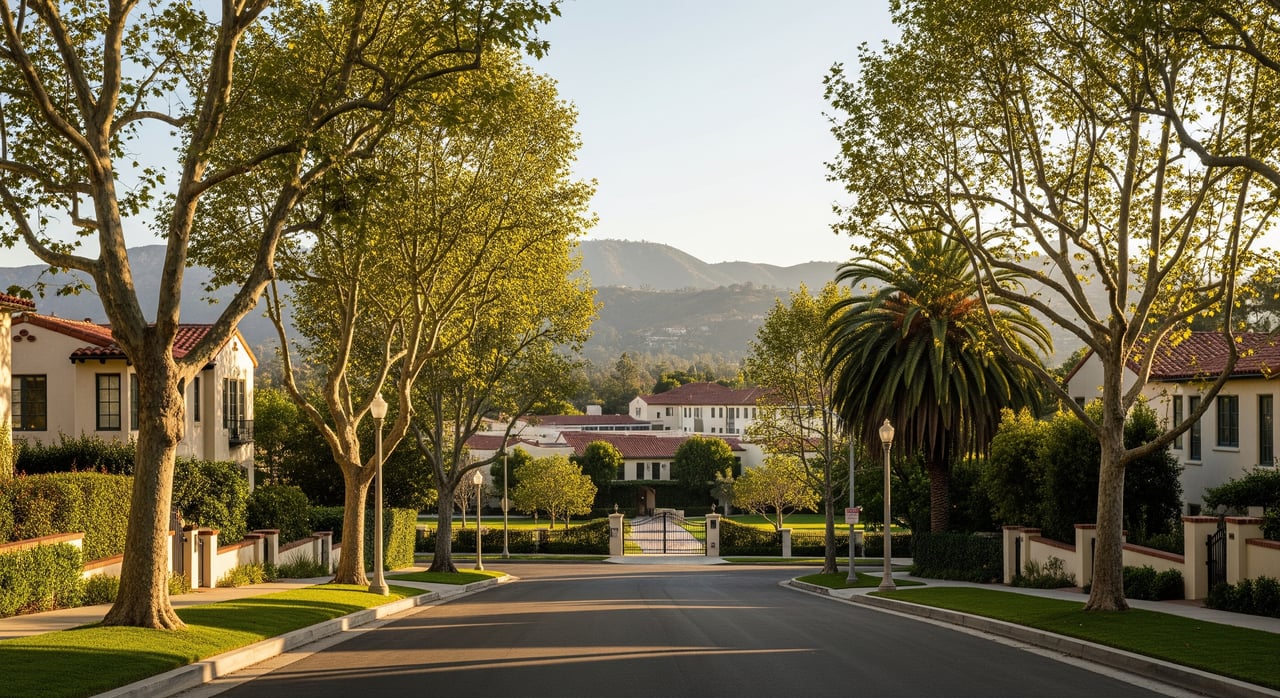
Trying to make sense of Sherman Oaks neighborhoods and school zones? You are not alone. Between LAUSD boundaries, magnet and charter options, and private school timelines, it is easy to feel overwhelmed. This guide breaks down how the area is organized, how school assignment works, and how to verify the right information before you make an offer. Let’s dive in.
Sherman Oaks at a glance
Sherman Oaks sits in the San Fernando Valley with Ventura Boulevard as the main east-west spine. Locals often describe areas relative to Ventura: the flats on the Valley floor, hillside pockets up toward Mulholland, and the corridor right along and just south of the Boulevard. These are informal micro-neighborhoods rather than strict lines, but they help you frame tradeoffs as you shop.
The flats and Valley floor
- Character: block-style streets, smaller lots on average, a mix of single-family homes and multifamily buildings, and close access to coffee shops and restaurants along Ventura.
- Family fit: you are more likely to find walkable amenities and shorter local trips to neighborhood elementary campuses. Commutes to I-405 or US-101 can be decent depending on the exact block.
- Considerations: smaller yards and more activity on major corridors.
Hills north of Ventura
- Character: hillside terrain, larger lots and homes, views, and some gated or private streets.
- Family fit: more private outdoor space and quiet streets are common, often at higher price points.
- Considerations: longer or traffic-sensitive commutes to work or school pickup points, and fewer walkable commercial options.
Ventura Boulevard corridor and south of the Boulevard
- Character: an active commercial strip with mixed residential pockets nearby, ranging from compact lots to modest single-family homes. Some areas sit close to freeway or office corridors.
- Family fit: direct access to shopping, classes, and extracurriculars can simplify after-school days.
- Considerations: plan around traffic on Ventura and potential noise near major routes.
How LAUSD zoning works here
Sherman Oaks is primarily served by the Los Angeles Unified School District (LAUSD). LAUSD uses attendance boundaries for neighborhood schools while also offering magnet, charter, and specialty programs with distinct enrollment rules.
Key terms to know
- School of residence: Every address falls within a specific boundary for elementary, middle, and high school. Living in a boundary typically gives you priority to enroll at that neighborhood school.
- Magnets and charters: Magnets use application and lottery systems. Charter schools have their own processes and may accept students from across the city. Seats and availability can change from year to year.
- Permits: LAUSD offers intra-district and inter-district permits that allow attendance outside your assigned boundary, subject to space, policies, and deadlines.
- Feeder patterns: Some elementary schools feed into specific middle and high schools, but these patterns can be complex and may change.
- Boundaries can change: Zones adjust as demographics shift or new programs open. Always verify the current assignment for a specific address.
What this means when you shop
- Do not rely on a neighborhood nickname to assume a school assignment. Two homes a block apart can map to different schools.
- The only authoritative way to confirm a home’s school of residence is to use LAUSD’s official boundary and school locator tools or contact LAUSD Enrollment Services directly.
- For performance and program fit, consult the California Department of Education’s CA School Dashboard, as well as each school’s website for details on programs, enrollment, and contacts. Third-party sites like GreatSchools and Niche can offer parent reviews and comparative context, though their methodologies differ.
Private and parochial options
You will find a variety of private choices near Sherman Oaks, including independent K–8 and K–12 schools, religious and parochial programs, and specialized models like Montessori or language immersion. Each school sets its own admissions timeline and process.
- Plan ahead: Applications often open months before the next school year. Starting 9 to 12 months ahead gives you the best chance to tour and meet deadlines.
- Budget and financial aid: Tuition ranges widely. Many schools offer need-based aid or scholarships. Confirm costs and aid timelines early.
- Logistics: Factor in daily drive time or shuttle routes, start times, aftercare availability, and extracurriculars when choosing a home location.
- Research tools: Use school websites, Private School Review, and local diocesan directories for current offerings and admissions steps.
Match priorities with Sherman Oaks pockets
Every family has a different mix of priorities. Here is how common goals often line up with Sherman Oaks’ informal micro-neighborhoods.
If you want walkability and short local trips
- Look in the flats along and just south of Ventura and areas close to neighborhood elementary campuses.
- Benefits: quick access to shops, coffee, and community activities; often easier walking routes to school.
- Tradeoffs: smaller yards and more traffic along major streets.
If you want more space and private yards
- Look in hillside pockets north of Ventura and near Mulholland-area enclaves.
- Benefits: larger homes and lots, quieter streets, and potential views.
- Tradeoffs: longer commutes to work or school pickups and fewer walkable amenities.
If you are balancing budget with Westside or DTLA commutes
- Look in mid-valley flats and areas just south of Ventura that offer easier access to the 405 or 101.
- Benefits: more middle-of-the-road pricing relative to hillside areas and better freeway access.
- Tradeoffs: plan around noise and traffic near major corridors; school assignments vary block by block.
If you are targeting a specific private or magnet school
- Consider neighborhoods that keep the daily drive manageable or align with shuttle routes.
- Understand that magnets and charters set their own priorities, and private schools are independent. Place-based priority depends on each program’s policy.
- Build extra time into your daily schedule for drop-offs, pickups, and activities.
A simple address-to-school workflow
Use this checklist to align a short list of homes with school options and commute realities.
- Pinpoint the exact streets or addresses you like in Sherman Oaks.
- Verify each address using LAUSD’s official boundary and school locator or contact LAUSD Enrollment Services to confirm the school of residence.
- Review the CA School Dashboard and the school’s website for program details, enrollment counts, and contact information.
- Research nearby magnet, charter, and private options. Note application windows and estimate drive times for drop-offs and aftercare.
- Visit the neighborhood during weekday peak times and at school pickup to gauge traffic patterns, parking, and walking routes.
- Ask your buyer’s agent to pull recent sales and active listings that map to your preferred attendance boundaries. Confirm whether any boundary changes are pending.
- If a particular public school is essential, review permit rules, magnet or charter application processes, and renewal policies before making an offer.
Example: narrowing two favorite streets
Imagine you love two streets a few blocks apart near Ventura. Start by running both addresses through LAUSD’s boundary tool or by calling Enrollment Services. If they map to different schools, dig into each school’s site and the CA School Dashboard to compare programs and logistics. Next, time the drive to your workplace and to any private or magnet schools on your radar during real weekday mornings.
If one home shortens your work commute but adds 15 minutes to a possible private school drop-off, weigh that daily impact. Visit both streets around 7:30 a.m. and 3:00 p.m. so you can see traffic, parking, and walking patterns for yourself. This grounded approach helps you choose the address that best fits your routine.
Tips for tours and timing
- Tour schools and neighborhoods on weekdays when traffic and campus life feel “real.”
- Speak with school offices about programs, aftercare, and any waitlist realities.
- Track application and permit deadlines on a single calendar so you do not miss a key step.
- Recheck LAUSD boundaries before you submit an offer, especially if you have been searching for several months.
Common mistakes to avoid
- Relying on a neighborhood nickname to assume a school assignment. Always verify by address.
- Treating a single rating site as the whole story. Cross-check the CA School Dashboard, school websites, and campus visits.
- Ignoring commute and pickup times. A 15-minute difference each way adds up fast.
- Waiting too long to start private or magnet applications. Many programs fill early.
Local resources to use
- Los Angeles Unified School District (LAUSD) for attendance boundaries, enrollment, permits, magnets, and charters.
- California Department of Education for the CA School Dashboard performance data.
- GreatSchools and Niche for parent reviews and comparative context.
- Los Angeles County Office of Education for district-level policies and resources.
- Local city maps and planning tools for parks, sidewalks, and walkability data.
Ready to align home and school fit?
You do not need to figure this out alone. If you want a short list of Sherman Oaks homes that match your commute, budget, and verified school zones, I can help you run the checks, compare options, and plan next steps. For hands-on guidance with buying, selling, or leasing in the Valley, connect with Brandon Kaufman for responsive, client-first support.
FAQs
Do school zones determine which home I should buy in Sherman Oaks?
- They are one important factor. Confirm the school of residence through LAUSD’s official tools and consider magnet, charter, or private options as alternatives.
Are Sherman Oaks public schools uniformly high performing?
- Performance varies by school. Review the CA School Dashboard, school websites, and in-person visits to evaluate academic and program fit for your family.
Can school boundaries change after I buy in Sherman Oaks?
- Yes. Districts adjust boundaries over time. If school assignment is critical, discuss recent changes and future possibilities with your agent and LAUSD before you close.
How far should I commute for a private or magnet school from Sherman Oaks?
- It depends on your schedule and traffic. Many families plan for 15 to 40 minutes, but real times vary by route and pickup windows. Test-drive your route during peak hours.