Ask anyone who has shopped for a house in Sherman Oaks and they will tell you the same thing before you finish the question: cross south of Ventura Boulevard and the price jumps. Views, privacy, bigger lots. That part of the story is true and every local agent repeats it.
What gets left out is why the premium exists in the first place, and what it does and doesn't protect you from once you're the one signing the closing documents. The hillside pricing isn't just a reward for a nicer street. It's also a rough proxy for a bundle of construction, disclosure, and insurance questions that flatland buyers rarely have to think about.
The Gap Everyone Quotes
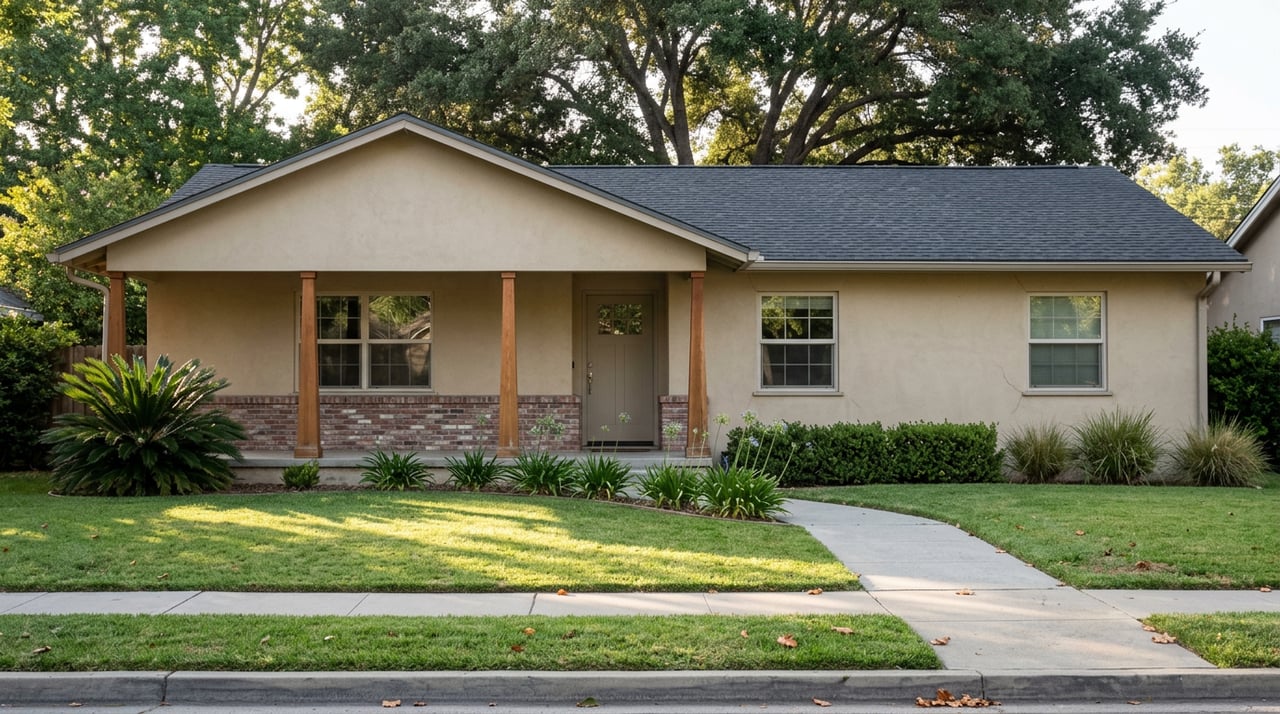
As of mid-2026, entry-level pricing north of Ventura in Sherman Oaks starts around $1.2 million to $1.3 million, typically on standard 1930s and 1940s lots running about 6,750 square feet. South of the boulevard, where the terrain shifts into the Santa Monica Mountains foothills, entry pricing starts closer to $2 million, and trophy properties in Longridge Estates, the hillside pocket that borders Studio City near Coldwater Canyon, reach $6 million to $10 million.
That's a real gap, and most of it is explained honestly: larger lots, more privacy, and views that flatland streets simply don't have. Roughly 80 percent of the land south of Ventura sits within the mountain foothills rather than on a flat grid, which is a physical fact about the terrain, not a marketing line.
But the number alone tells a buyer nothing about what they're underwriting when they pay it.
What "Hillside" Actually Means in Construction Terms
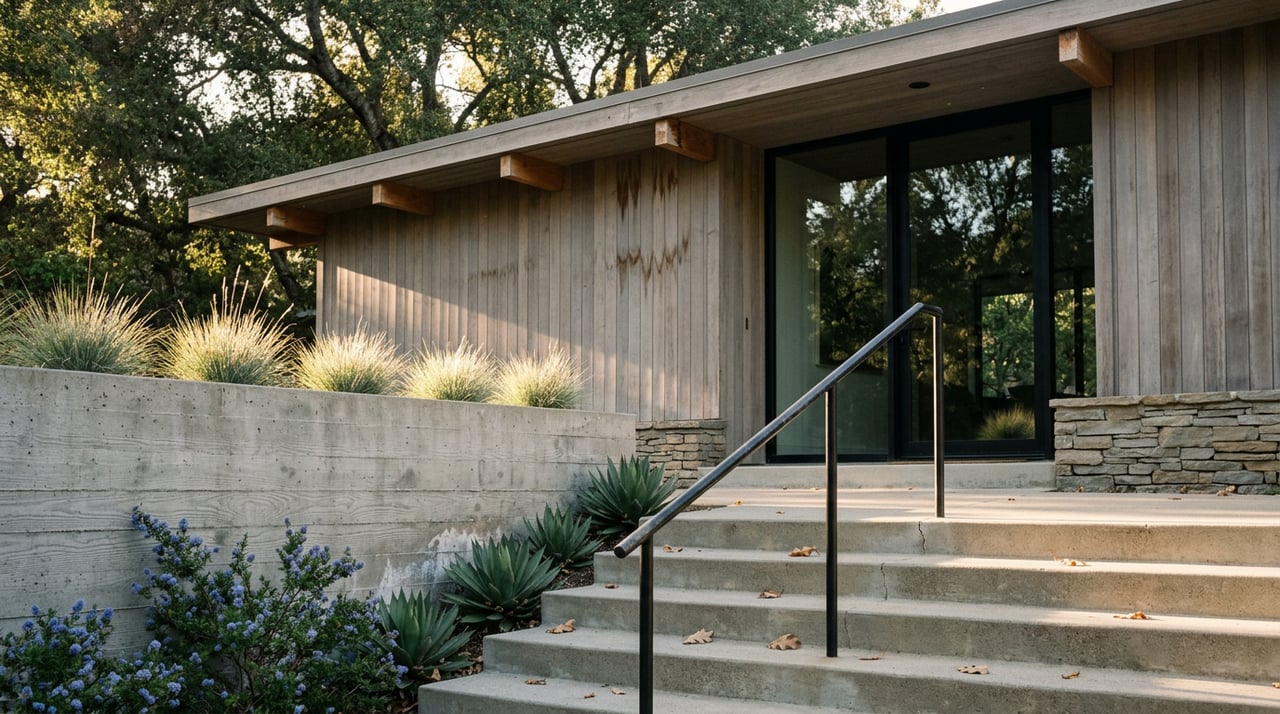
The homes that carry that premium are, in large part, mid-century hillside houses built on sloped lots using post-and-beam construction, with walls of glass designed to frame the view rather than block it. Architects like Richard Dorman and Rodney Walker did some of their defining work on these streets. It's a genuinely distinctive architectural inheritance, and it's also a structural category with a specific history in this exact neighborhood.
During the 1994 Northridge earthquake, nine single-family hillside houses built on stilts collapsed in Sherman Oaks. Not somewhere in the general Los Angeles area. Here, on the streets south of the boulevard, in the same terrain that today's hillside listings occupy. That single fact is why hillside transactions in this neighborhood carry a different due-diligence checklist than a flatland ranch a mile away, even when both homes are asking similar prices per square foot.
The flats have their own issues, mostly expansive clay soil that swells and shrinks with the seasons and slowly cracks shallow foundations. The hills fight a different battle: slope creep, drainage, and retaining walls holding back soil that wants to move downhill. Neither problem is worse across the board. They're just different enough that treating "Sherman Oaks real estate" as one market, priced on one curve, misses the point of the premium entirely.
| North of Ventura (flats) | South of Ventura (hills) | |
|---|---|---|
| Typical entry pricing | $1.2M–$1.3M | $2M and up |
| Common foundation era/type | Slab or raised, 1930s–40s | Post-and-beam, hillside pad or stilt-supported |
| Primary structural risk | Expansive clay soil movement | Slope creep, drainage, retaining wall integrity |
| Added due diligence step | Standard inspection | Geotechnical or structural engineer review recommended |
The Paperwork That Doesn't Show Up in the Listing Photos
Every California home sale requires a Natural Hazard Disclosure Statement, a report that checks a property against six state-mapped hazard categories: two seismic, two fire, and two flood. The seller's obligation is set out in California Civil Code Section 1103.2, and once the buyer receives the report, they get a three-day window to review it before deciding whether to move forward or walk.
On a flatland Sherman Oaks street, that report is often a formality. On a hillside street south of the boulevard, it can flag a designation most buyers have never heard of before house hunting: an Alquist-Priolo Earthquake Fault Zone, mapped by the state around active fault traces, which restricts new construction across the fault line itself. It's a separate legal category from a Seismic Hazard Zone, which covers a different risk entirely, ground failure and landslide potential during strong shaking rather than fault rupture. A property can be flagged for one, both, or neither, and the distinction changes what kind of follow-up investigation actually makes sense before removing contingencies.
None of this means a hillside home is a bad buy. It means the disclosure package on a hillside property is doing more work than the same stack of papers on a flatland one, and it rewards a buyer who reads past the signature line.
Insurance Is Where the Premium Gets Tested
The disclosure report tells you what zone you're in. The insurance quote tells you what that zone actually costs, and this is often where hillside buyers get their first real surprise.
Wildfire risk models score properties individually based on proximity to brush, slope, vegetation density, and fire apparatus access, not by city or even by zip code. A flat, well-watered lot deep in the Sherman Oaks grid can score low and stay easily insurable through a standard carrier. A hillside home backing onto the chaparral above Ventura Boulevard can score high enough that an admitted insurer declines to write a policy at all, even on a property with no claims history. Two houses a few streets apart can have completely different experiences at renewal time, one routine, one a scramble to replace lapsing coverage.
The practical fix is timing, not luck. Buyers looking at hillside listings should request a real insurance quote before removing contingencies, not after. A non-renewal or declined application discovered late in escrow can stall financing at the worst possible moment. On the upside, California's Safer from Wildfires framework requires carriers using these risk scores to recognize specific mitigation steps, a Class A fire-rated roof, ember-resistant vents, defensible space, and offer discounts accordingly, so a seller who has already done that work has a real number to point to.
What This Means If You're Buying or Selling in the Hills
The premium south of Ventura is real and it's earned by genuine differences in lot size, privacy, and view. It isn't, on its own, a substitute for due diligence specific to hillside construction. A buyer comparing two listings at the same price per square foot, one flat and one hillside, is not comparing the same risk profile, even if the spreadsheet says otherwise.
For sellers, that means getting ahead of the story: order the NHD report early, have any prior geotechnical or structural work documented and ready to hand over, and know before listing whether the insurance picture on the property is straightforward or complicated. For buyers, it means treating the insurance quote and the hazard disclosure as offer-strategy inputs, not closing-week paperwork.
FAQ
Does an Alquist-Priolo Fault Zone designation mean I can't buy the home? No. It means new construction directly across the mapped fault trace is restricted and a setback applies, but existing homes in the zone are bought, sold, and financed regularly. The designation triggers a disclosure and, often, a buyer's decision about further investigation, not an automatic block.
Is the hillside premium still worth paying if insurance is harder to place? That depends on the specific street and structure, which is exactly why a blanket answer doesn't hold up. A hillside home with a hardened roof, cleared defensible space, and a documented retrofit history is a very different insurance conversation than one without any of that.
What's the difference between the NHD report and the Transfer Disclosure Statement? The NHD report covers state-mapped hazard zones, seismic, fire, and flood. The Transfer Disclosure Statement is broader and covers material facts about the property itself, known repairs, unpermitted work, and defects the seller is aware of. Buyers should expect and review both.
If you're weighing a hillside street against a flatland one in Sherman Oaks, the right comparison starts with the disclosure package and the insurance quote, not just the price per square foot. Brandon Kaufman works this exact terrain, from Longridge Estates to the flats north of the boulevard, and can walk you through what a specific address's hazard zone and construction era actually mean before you write an offer. Request a free home valuation or schedule a consultation to get started.