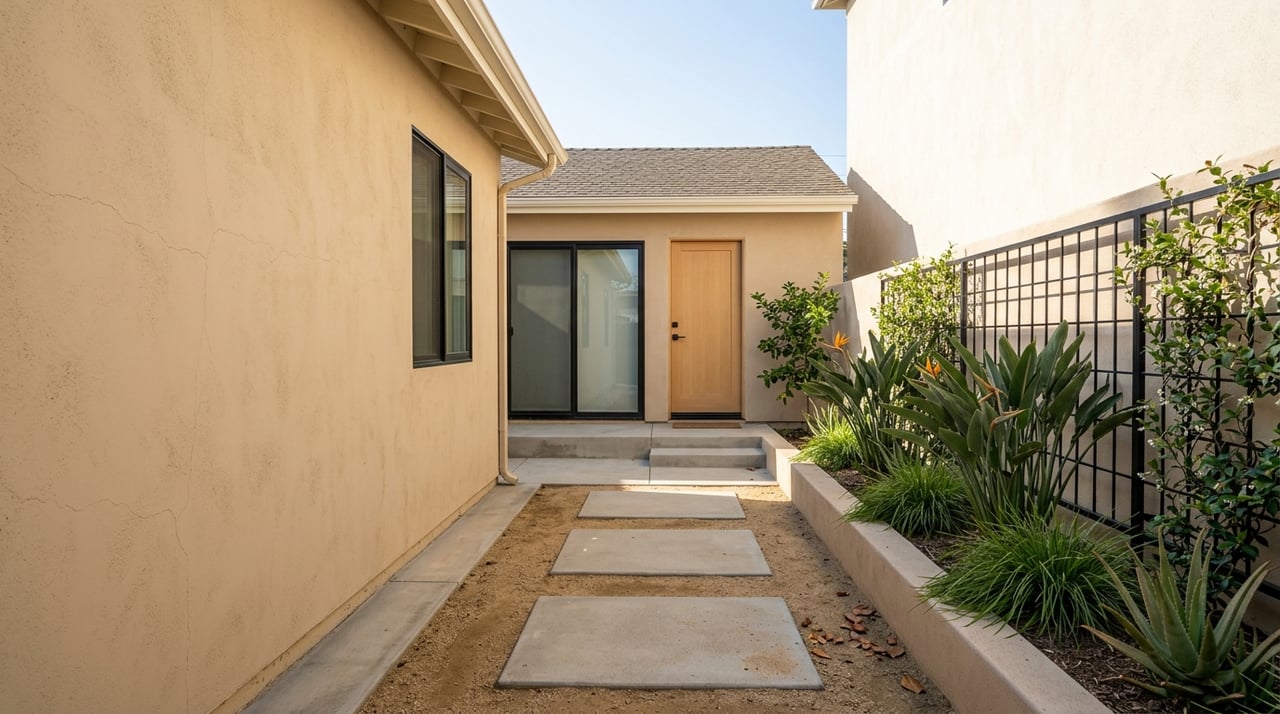
Thinking about building an ADU in Valley Village? You are not alone. Many homeowners are looking at the extra space, rental flexibility, and long-term value an accessory dwelling unit can offer, but the rules can feel more confusing than the opportunity itself. The good news is that if you understand the City of Los Angeles process, your parcel’s specific limits, and a few key cost factors, you can make smarter decisions before you spend time or money. Let’s dive in.
Why ADUs Matter in Valley Village
An ADU can create useful living space without buying another property. For some homeowners, that means room for family. For others, it means rental income or a way to make their property more flexible over time.
California’s Housing and Community Development department identifies ADUs as an affordable housing type because they do not require new land, major infrastructure, structured parking, or elevators. Its March 2026 handbook also notes how much demand has grown, with annual ADU permits in California increasing from 1,336 in 2016 to 30,354 in 2024.
In Valley Village, the big question usually is not whether an ADU is broadly allowed. It is which combination of state law, City of Los Angeles rules, and parcel-specific controls applies to your lot.
Start With What Is Allowed
The City of Los Angeles says ADUs, junior ADUs, and movable tiny homes can be built in areas that allow residential use. That creates a broad starting point, but your actual project still depends on zoning, overlays, and site conditions.
For a single-family lot, California law generally allows one ADU and one JADU. A JADU must be no more than 500 square feet and must be contained entirely within a single-family residence.
State law also gives homeowners an important timing protection. A completed ADU application must be approved or denied within 60 days.
ADU vs. JADU
If you are comparing options, it helps to know the difference early.
- ADU: A secondary living unit that can be detached, attached, or created through conversion of existing space
- JADU: A smaller unit, up to 500 square feet, located entirely within a single-family home
- Single-family lots: Generally allow one ADU and one JADU
- Multifamily lots: May allow more options, depending on the property and configuration
For many Valley Village homeowners, a standard ADU offers more flexibility. A JADU can still be useful, but it comes with more specific design and occupancy rules.
Check Your Parcel Before You Plan
Before you sketch layouts or request contractor bids, check your lot. In Los Angeles, parcel details can change what is possible even when ADUs are broadly allowed.
City Planning identifies ZIMAS as the official tool for checking zoning, permit history, community plan area, and overlays. It also notes that some parcels have additional controls, such as Historic Overlay Preservation Zones, Specific Plans, or Community Design Overlays.
Los Angeles also currently uses both an Original Zoning Code and a New Zoning Code, depending on the community plan area. That means two homes in the same general area may not follow the exact same path.
What to verify in ZIMAS
Use ZIMAS to review:
- Zoning designation
- Permit history
- Community plan area
- Historic overlays or preservation controls
- Specific plan or design overlay restrictions
- Any parcel conditions that could affect siting or review
This is one of the most important early steps because it tells you whether your project is likely to be simple, constrained, or worth redesigning before you submit.
Size and Setback Rules Homeowners Should Know
A lot of homeowners assume their lot must meet a minimum size to build an ADU. Under current California rules, local governments may not impose minimum lot-size requirements for ADUs.
State rules also say lot coverage or floor area ratio standards cannot block an 800-square-foot ADU if the project provides 4-foot side and rear setbacks. Local ordinances may set size limits, but they must allow at least 850 square feet, or 1,000 square feet for an ADU with more than one bedroom.
If a local ordinance is not compliant, the state default for a new detached ADU is 1,200 square feet. Attached ADUs may be limited to 50 percent of the primary home’s floor area.
Conversions can be easier
For many Valley Village properties, converting existing space may be simpler than building a new detached unit. Conversions of existing living area or accessory structures generally do not have setback requirements.
That matters on tighter lots where backyard placement is difficult. A garage conversion or interior conversion may be easier to approve and easier to fit than a freestanding backyard ADU.
How ADU Placement Works in Los Angeles
Los Angeles adds practical siting rules that affect real-world design. The City’s zoning guidance says detached ADUs are generally placed behind the primary residence, with limited exceptions.
The same guidance also says front setback rules cannot be used to block an 800-square-foot ADU when no other location works. For many homeowners, that is an important safety valve on a constrained lot.
The City’s summary table lists detached ordinance ADUs at up to 1,200 square feet and 16 feet in height, or 18 feet near transit, with a 2-foot roof pitch bonus. Even with those allowances, not every parcel can comfortably fit a detached unit with good access, privacy, and usable yard space.
Parking Is Often Less Restrictive Than Expected
Parking is one of the biggest ADU myths. Many homeowners assume they must create extra parking, replace garage spaces, or provide guest parking.
California rules are often more flexible than people expect. Parking standards may not exceed one space per unit or bedroom, and no parking can be required in several common situations.
When parking may not be required
No parking can be required for an ADU when it is:
- Within one-half mile of public transit
- In a historic district
- Located within the primary residence
- Located within an accessory structure
- On a lot where on-street parking permits are not available to the ADU occupant
- Within one block of a car-share vehicle
- Submitted together with a new primary dwelling
Guest parking also cannot be required. If you remove a garage, carport, covered parking structure, or uncovered parking space to build an ADU, replacement parking cannot be forced.
Fees, Utilities, and Building Systems
The cost side of an ADU depends a lot on what you are building. A new detached unit is usually treated differently than a conversion of existing space.
According to California HCD, ADUs and JADUs created from existing space are not treated as a new residential use for water and sewer connection fees unless they are built with a new single-family dwelling. That can make a conversion more attractive from a budget standpoint.
Impact fees are also treated differently by size. ADUs up to 750 square feet and JADUs up to 500 square feet are exempt from impact fees, while larger ADUs are charged proportionally.
Energy and sprinkler rules
A few technical rules also matter early in planning:
- Newly constructed detached ADUs are subject to California Energy Code solar requirements
- Building an ADU does not by itself trigger sprinkler requirements in the existing primary home
These details can affect design, budget, and the contractor team you choose.
Rental and Owner-Occupancy Rules
If your goal is rental income, make sure you understand occupancy rules before you build. Local agencies generally cannot require owner-occupancy for most ADUs.
JADUs are different. If a JADU shares sanitation facilities with the main home, owner-occupancy is required, and if the unit is rented, the rental term must be longer than 30 days.
In Los Angeles, LAHD also notes that adding an ADU or JADU can bring a parcel within the Los Angeles Housing Code. If a parking space or another housing service is removed from a tenant, rent reductions may be required.
If your property is already covered by the Rent Stabilization Ordinance, LAHD says the RSO generally applies to residential units built on or before October 1, 1978 unless there is only one single-family dwelling on the parcel. If you have an occupied property or an older income property, this is an area to review carefully before finalizing plans.
Will an ADU Add Value?
An ADU can improve a property’s flexibility and income profile, but the return is project-specific. There is no one-size-fits-all answer.
Freddie Mac says adding an ADU can increase home value, create rental income, and support flexible family housing. It also makes clear that legality matters because appraisal and income analysis depend on the unit being allowed by zoning and supported by comparable sales and rentals.
In plain terms, a permitted ADU is not the same as an unpermitted one. Buyers, appraisers, and lenders may view the difference in a very real way.
What affects market appeal
In Valley Village, buyers may weigh several factors when evaluating an ADU:
- Legal status and permits
- Unit size and layout
- Privacy from the main home
- Parking setup
- Finish quality
- Overall lot usability after construction
That is why planning the right ADU matters just as much as building one.
A Smart ADU Workflow for Valley Village
If you want to avoid expensive surprises, follow a practical sequence. Start with what the parcel allows, then test what physically fits, then move into formal plans and permitting.
LADBS says homeowners can use the Approved Standard Plans Program, which offers pre-approved ADU plans that have already been reviewed for code compliance and can then be adapted to the site. That can save time for some projects, especially if you want a more streamlined starting point.
Recommended first steps
- Check ZIMAS for zoning, permit history, community plan area, and overlays
- Confirm whether the parcel has any historic or hazard-related restrictions
- Decide whether a garage conversion, interior conversion, attached ADU, or detached ADU makes the most sense
- Have an architect, designer, or local contractor test the layout against your lot
- Review likely fee, utility, parking, and energy-code implications
- Submit a complete application to LADBS
This approach helps you focus on what is actually feasible instead of what only looks possible on paper.
Why Local Guidance Helps
ADU rules may sound straightforward at a high level, but the details are where homeowners usually get stuck. In Valley Village, even a promising lot can be affected by overlays, siting limits, access issues, or property-specific conditions.
If you are thinking about building, remodeling before a sale, or buying a property because of ADU potential, local market guidance can help you think beyond permits alone. The best decision is not always the biggest unit. It is the one that fits your lot, your timeline, and your long-term property goals.
Whether you are exploring added living space, future rental income, or resale strategy, working with someone who understands Valley Village housing stock and buyer expectations can help you make a more confident move. If you want practical guidance on how an ADU could affect your property’s value or marketability, connect with Brandon Kaufman.
FAQs
What is an ADU in Valley Village?
- An ADU is a secondary living unit on a residential property, and in Los Angeles it can be detached, attached, or created by converting existing space.
What is a JADU in Valley Village?
- A JADU is a junior accessory dwelling unit that must be no more than 500 square feet and located entirely within a single-family residence.
How many ADUs can a single-family property have in Valley Village?
- Under California law, a single-family lot generally allows one ADU and one JADU.
Do you need extra parking for an ADU in Valley Village?
- Not always. California rules limit parking requirements, and no parking can be required in several situations, including some transit-accessible or conversion-based projects.
Can you convert a garage into an ADU in Valley Village?
- Yes, and a garage conversion may be easier to site than a new detached backyard ADU, especially on a smaller or more constrained lot.
How long does ADU approval take in Los Angeles?
- State law requires a completed ADU application to be approved or denied within 60 days.
Will an ADU increase home value in Valley Village?
- It can, but the result depends on the unit’s legal status, size, privacy, finish level, parking setup, and how the market responds to the property overall.
What should homeowners check first before building an ADU in Valley Village?
- Start with ZIMAS to verify zoning, permit history, community plan area, and any overlays or parcel-specific restrictions that could affect the project.